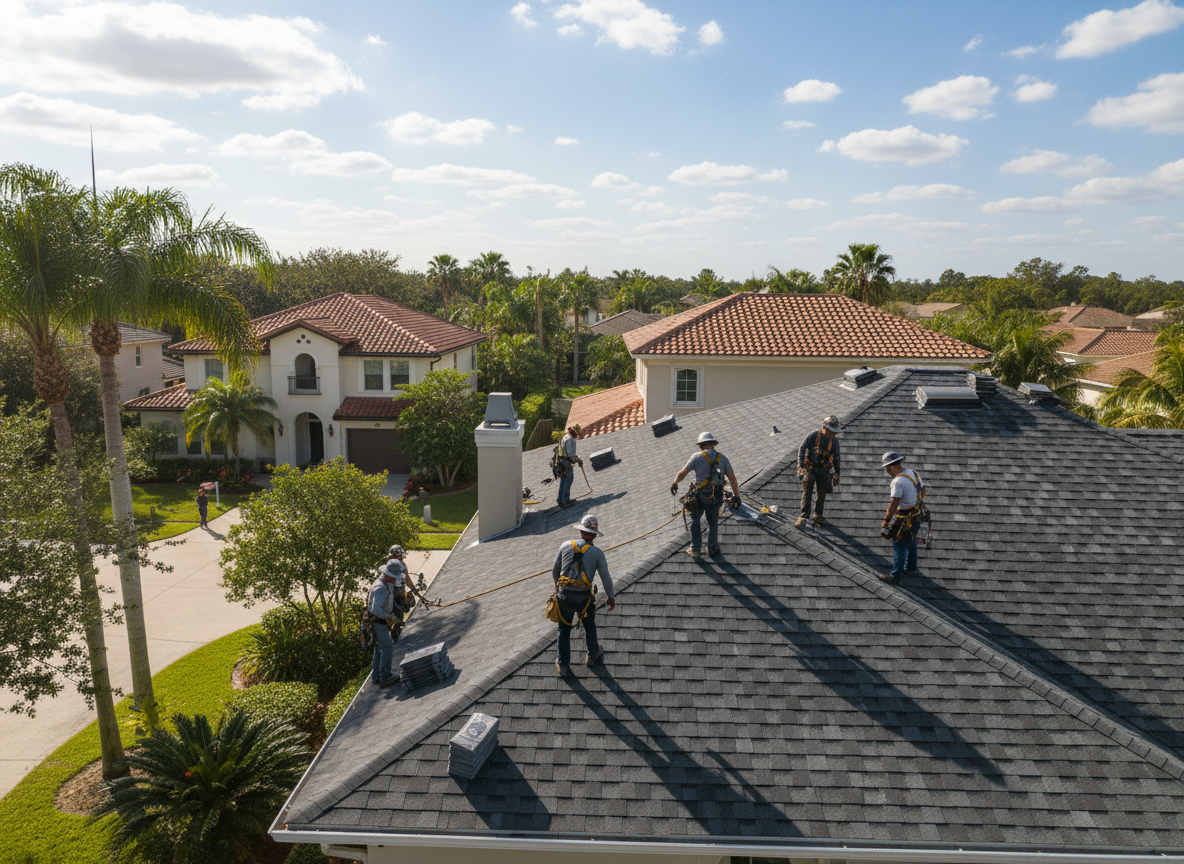
The Panhandle is the part of Florida that faces the Gulf head-on, and its roofing history is written by landfalls. Pensacola and Panama City have both taken direct hits in the last two decades, Destin and Fort Walton Beach sit on a narrow coastal strip, and Tallahassee sits inland where the wind arrives with less water but no less force. Roofing here is a wind question first and a sun question second.
Which Cities Do We Cover Here?
Pensacola, Panama City, Tallahassee, Destin and Fort Walton Beach, plus the communities between them. This is one of five Florida regions we work across, arranged from our Orlando office. No branch or local depot is claimed in the Panhandle, because we do not operate one.
What Makes Panhandle Roofing Different?
The Gulf exposure is more direct than on the peninsula's east coast. A storm that tracks through the Gulf can put the strongest quadrant onshore here, and the coastal strip from Pensacola to Panama City has taken repeated direct landfalls. That history shapes both the housing stock and the local expectations of a roof.
Metal is more common here than in most of Florida, particularly on rural and coastal properties, in both standing seam and exposed-fastener profiles. That makes fastener condition and corrosion a routine part of roofing work in this region, not an occasional one.
Housing Stock and What It Means
Pensacola and Panama City include large areas rebuilt after storms and large areas that were not, so a street can carry a roof from the 1960s next to one from 2005. Tallahassee's stock is older again in places, with mature tree cover and a lot of shingle. On a mixed street, the age of one roof tells you nothing about the next, and each assessment starts from what is actually on the building.
Permits and Code Across the Panhandle
Roofing work is permitted by the local building department under the Florida Building Code: Escambia County and the City of Pensacola, Bay County and the City of Panama City, Okaloosa County for Fort Walton Beach and Destin, and Leon County and the City of Tallahassee. Each has its own process.
The High-Velocity Hurricane Zone applies in Miami-Dade and Broward, not here, but the wind provisions of the Florida Building Code apply statewide and the design wind speed for a coastal Panhandle site is high. Product approval for roof coverings and their fastening patterns is part of compliance, and on a coastal site the corrosion resistance of the fasteners is part of whether the roof performs.
Roof Types Across the Region
Shingle dominates the inland and residential stock in Tallahassee and the northern parts of Escambia and Bay counties. Metal is common on coastal and rural buildings, in both concealed and exposed-fix systems. Tile appears on newer coastal construction and on Mediterranean-style developments. Low-slope membranes cover the commercial stock and the mid-century flat sections.
Wind damage in the Panhandle frequently shows as covering lost at edges, ridges and hips rather than as a general failure, which points at fastening and detail work rather than at the material as a whole. That is the pattern to look for on a roof that has been through a storm season here.
What to Have Ready When You Call
The address, because it decides the permit office. The covering type and the age of the roof if you can establish it from the last permit. Whether the roof has been through a storm that caused damage, and whether that damage was ever repaired or only covered. And photographs of the roof from the ground, particularly of any edge, ridge or hip that looks different from the rest. Florida Roof Repair Pros, 4720 Millenia Blvd, Suite 175, Orlando, FL 32839, (407) 557-4529.
Around Panhandle
We regularly work near:
- 📍Pensacola Beach
- 📍Naval Air Station Pensacola
- 📍St. Andrews State Park, Panama City
- 📍Florida State Capitol, Tallahassee
- 📍Destin Harbor
Roofing Company in Panhandle — Local Notes
- •Direct Gulf exposure with a history of landfalls along the coastal strip
- •Housing stock mixes post-storm rebuilds with roofs from the 1960s onwards
- •Metal roofing is more common here, so fastener and corrosion work is routine